Wednesday, May 29, 2013

REPOST: If You Use the Web, You Are a 'Curator'


This Mashable article characterizes the Web-based curator. Ready your notepad and read on.


Image Source: Mashable

When you were four, you imagined "engineers" as men in striped overalls who shouted "all aboard!" from trains. Later you learned that most engineers study more than just locomotives: mechanics, chemicals and even complicated structures like roller coasters.

Similarly, you pictured "curators" as snobby museum employees who talk about brush strokes and Impressionism. Today, however, curation encompasses a whole new catalog of professions, brands and tools — and most revolve around the web.

A curator ingests, analyzes and contextualizes web content and information of a particular nature onto a platform or into a format we can understand. In other words, a curator is like that person at the beach with the metal detector, surfacing items and relics of perceived value. Only, a web curator shares those gems of content with their online audiences.

And since people create 571 new websites every minute, tweet 175 million times per day and upload 48 hours of new video each minute, a curator's work is never done.

It seems everywhere you look on the web, a different kind of curation is cropping up. Do you use Pinterest or Tumblr? Believe it or not, you're a social curator — or you're following users who are. These social platforms are as much about repinning and reblogging content from other people (curation) as they are sharing your own ideas (creation).

Take a look at your Facebook profile, at the types of articles you save on Pocket, at the list of subreddits to which you subscribe. Notice any patterns? Maybe you tend to share cat GIFs or Pocket news about the oil crisis. Sharing those interests makes you a curator.

The term's sweeping definition has led some to criticize and attempt to narrow its use. Some believe "curator" to be a reappropriated, throwaway term, one that simply elevates marginally focused web users. Some
believe "curator" to be a reappropriated, throwaway term, one that simply elevates marginally focused web users.

"Guess what? Assembling a group of tangentially related things and publishing them online does not make you a curator," writes Mel Buchanan, the Hermitage Museum's assistant curator in a blog post titled "An Open Letter to Everyone Using the Word ‘Curate’ Incorrectly on the Internet." [The link to the original post has since been disabled.] "So what does it make you? A blogger? A list-maker? An arbiter of taste? Sure, I’ll take any one of those. Just stop calling yourself a curator," writes Buchanan.

But it's hard to argue that some people are capitalizing on their curation talents. As founder of Brit.co, Brit Morin has successfully merged two seemingly disparate niches to form a new community: a site for connected crafters. If it sounds zany, think again. Turns out, some of the same people (primarily women) who churn out Pinterest boards by the barrel-full scramble the web for innovative DIY projects and digital lifehacks. Morin recognized that community existed, then fashioned a custom menu of content to serve it. Curation.

But it's hard to argue that some people are capitalizing on their curation talents. As founder of Brit.co, Brit Morin has successfully merged two seemingly disparate niches to form a new community: a site for connected crafters. If it sounds zany, think again. Turns out, some of the same people (primarily women) who churn out Pinterest boards by the barrel-full scramble the web for innovative DIY projects and digital lifehacks. Morin recognized that community existed, then fashioned a custom menu of content to serve it. Curation.

It's also one of the reasons you're encountering "lists" all over your Twitter stream or RSS feed. Think "15 Signs Your Best Friend Is a Sociopath" and "45 Cats Posing as Pinup Models." Many in the media industry criticize this form of journalism, but in the end, it's yet another form of content curation. Instead of googling "Mother's Day gifts" and sifting through 22 pages of individual results, you can click on "15 Best Gifts for Sporty Moms."

Some media sites choose to curate articles already published and reported by other sites. For instance, Boing Boing and The Awl feed links that reference news reported by other sites around the web, tailoring content that will resonate with their readership. Much of this type of curation requires a keen understanding of the web zeitgeist.

Others take a more scientific approach, in the form of data curation. People like Nate Silver proved that strategic data scraping not only lends itself to incredibly precise journalism, but to industries like graphic design, marketing, politics and much more.

More and more people are taking the reins into their own hands. Consumer curators are flocking to sites like The Fancy to browse products and silo them into categories, for example, "Things to Buy for Our Trip to Italy" or "Baby Shower Gift Registry." Other curation tools, such as Pearltrees and Bundlr, aren't as consumer-driven but nonetheless help users organize and structure web content that matters to them.

As much as the term gets criticized, curation requires patience, resourcefulness and a keen editing eye. It means becoming fluent in one particular dialect of the web, versus trying to speak its entire language. It's the reason journalists have beats, and the reason you chose one major in college, instead of seven.

"I think that the liberal use of the term curator makes it stronger and more valuable," writes self-proclaimed "museum geek" Suse Cairns. "Some of our sector’s lingo is making its way beyond the walls of our institutions, and getting picked up by the mainstream in a positive way ... If the hip and awesome are associated in some way with museums, great."

Perhaps the best part? Curation is a never-ending job, and it never gets boring. Because chances are, you're one of those contributing 684,478 pieces of Facebook content every single minute. Give us a break — that's a lot of stuff to sift through.

MySearchResults.com picks content from mainstream search engines to give you relevant data which you can use to your ultimate curatorial satisfaction. 

Thursday, April 25, 2013

Tracking the suspects of Boston bombings through Internet sleuthing


The Boston Marathon bombings on April 15, 2013 killed three civilians and hospitalized 183 more (including 13 people who had their limbs amputated). Without any suspect who claimed responsibility for the terrorism, police authorities used the power of the Internet to gather information that may lead to the arrest of the bombers.

Image Source: afr.com

The FBI specifically requested civilians to help them track the suspects by sending photos and videos of the marathon to the agency’s website. This announcement has activated crowdsource sleuthing. In a photo submitted by an amateur detective, for instance, a young man with a baseball cap was seen calmly walking from the sight of explosion. This man would be later identified as Dzhokhar Tsarnaev, one of the bombers.

Image Source: viralread.com

There, was however, a drawback to Internet sleuthing. Without any training in profiling criminals, some amateur detectives uploaded photos of innocent bystanders and pointed them out as the terrorists. Sulahaddin Barhoum, for instance, was wrongly accused as a Boston bomber after his photos from the marathon went viral on the Internet. He had to go to FBI to clear his name and protect his family.

Image Source: cbc.ca

Although Internet sleuthing has helped track the Boston bombers Dzhokhar Tsarnaev and his brother Tamerlan, it remained questionable for critics. Wrong information could damage the reputation of the wrong guys, just like what happened to Barhoum. Speculations may also impede the investigation process.

But police authorities are no fool. They have clandestine plans in catching criminals. Could the FBI be only making the Internet sleuthing scenario to create panic for the suspects, a tactic that had eventually led to the arrest of Dzhokhar and the death of Tamerlan?  

Image Source: kstp.com


People can find photos and videos of the Boston Marathon bombings through MySearchResults.com, an Internet portal that handles aggregate data from other search engines. Follow this Twitter page to keep abreast of the latest happening in information technology.

Monday, March 25, 2013

German copyright law takes aim at Google links


The ancillary copyright bill was approved by Germany’s parliament, the Bundestag, on March 1, granting publishers the right to charge companies for reproducing their online content. However, search engines like Google, Bing, MySearchResults, and Yahoo! are still allowed to display snippets or small excerpts from publishers’ websites for free. However, what defines a ‘snippet’ or a ‘small excerpt’ is a bit of a grey area in the copyright law.

Image Source: thetechblock.com


In its original form, the ancillary bill had Google carping. Google would bear the brunt had the bill been passed in its damaging form – requiring news aggregators and search engines to pay royalties for the commercial use of snippets or excerpts of their content. Oppositions said that the original proposal would force Internet giants like Google into a profit-sharing scheme that’s encroaching the free flow of information and innovation online.

Image Source: brocku.ca


Other activists saw the original proposal as an offshoot of lobbying against the glaring sales disparity between Google and German press publishers. Apparently, Google earns billions of euros from its advertising and online services without having to sell advertising campaigns on its news aggregation service in Germany while the news publishers are earning a measly amount from their online advertisements.

Image Source: conversationmarketing.com


These congruent validations made up the rationalization to repurpose the ancillary bill. A last-minute change on the copyright law by the Free Democratic Party required only the companies reproducing the whole content to compensate the publishers.

The Bundesrat is yet to decide on the ancillary copyright bill.

MySearchResults handles aggregate data from major search engines. Try it at MySearchResults.com.

Wednesday, March 13, 2013

To Caesar what’s Caesar: Sounding the alarm for attributing aggregated content


Image Source: masternewmedia.org


Who’s policing the Internet?

At least against indiscriminate acts such as aggregating content sans proper attribution. To clarify, no such thing as an anti-aggregation campaign exists, but a curator’s code must. Aggregation and curation are now the buzzwords of a booming enterprise: crafting stories, ideas, or subjects on Web 2.0. Both almost synonymous, either is the version of syndication for mostly blogging, including micro, and article manufacture. The Huffington Post (HuffPost), AllTops, and Esquire are all aggregators in a sense.

And then there are those who have risen to the call.


 Image Source: css-tricks.com


Last year, Mr. Simon Dumenco’s double-hit, Advertising Age article on two Twitter trending topics was hunted down by a couple of traffic-seekers. The writer, however, observed that as the bigger game player, HuffPost was pinging back less traffic than its smaller counterpart, Techmeme. This incited Dumenco to espouse the Council on Ethical Blogging and Aggregation.


Image Source: socialmediatoday.com


Soon, the effort caught on with the big guns: the editors-in-chief of Esquire, The Atlantic, and New York magazine were linking arms with the editors-in-chief of Slate, The New York Observer, and Longreads.com, the committee members. A panel meeting occurred in Austin, Texas. Aggregation, linking, and summarizing must be congruent with best practices put in black-and-white, they said. With this set in motion, similar efforts are expected to arise. This is not tantamount to seeking justice, but only to ending the disparities between misappropriated behaviors and the essence of consumer Internet. If it’s the parties involved policing their way to untangling the Web, so be it.  


MySearchResults self-regulates when it comes to aggregating content from the search giants to its portal. For specialized answers to your online queries, check out its site.

Wednesday, January 30, 2013

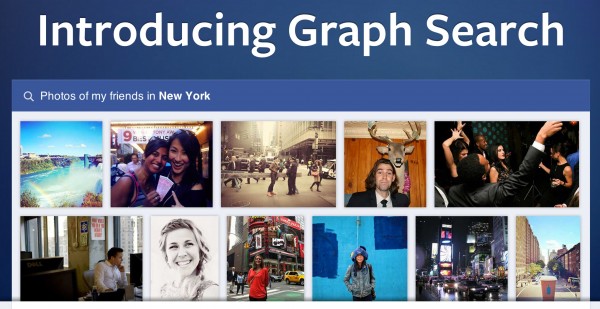
Facebook's Graph Search: It's a small search world


As if Google isn’t beleaguered enough with the European challenge to its dominance, equally stock-busting Internet heavyweight Facebook is expanding its empire into search functions through its Graph Search feature. Not that it’s going to see the competitive search engine queries from now on, as Google remains the untrammeled champion of search result sieving. Facebook, however, has something that Google doesn’t: friends.

Image source: searchengineland.com


There’s nothing like peer pressure or word of mouth to influence search queries. Google could shrug this off by claiming that the world’s news and most relevant information archives are at its disposal, especially as it has been aggregating like a demon. But even news sites are creating their own circles of friends over Facebook. In time, Google’s reaction to this tighter, more focused ecosystem of research could be tested.

Already, Google is exhibiting its sang froid. Web and business analysts are also around to allay its insecurities of being overtaken as a premier search engine. For one, Facebook is yet to have a platform that will localize searches the way Google maps does. The queries conducted over Graph Search will play into the hands of very specific interests, such as local restaurants and movie schedules.

Image source: foxnews.com

Graph Search is predicted to generate revenue for Facebook, since it directly displays what consumers of different tastes want in any given circle of people. Products and services come up as search results based on popularity, or the number of Facebook “likes” they generate.

Image source: gadgets.ndtv.com

It also boosts its partnership with Microsoft, whose own search platform, Bing!, will be used in the two-column interface of Graph Search results as the aggregator of recommendations. In all likelihood, Facebook will evolve into at least a special kind of a metasearch engine, much like MetaCrawler or MySearchResults.

MySearchResults was developed as a refinement for search results on the usual platforms, like Google and Yahoo!. As a metasearch engine, it scrounges for the top results across different search engines, allowing the user to prioritize certain results. Try it out here.

Friday, January 18, 2013

Most Googled in 2012


As a search results aggregator, MySearchResults has to be attuned to the comings and goings of trends in premiere search engines. An annual summary of Google’s most searched topics, also known as the Google Zeitgeist, services everyone’s informational needs. There’s just something for everyone with Internet.

The Google Zeitgeist wasn’t meant to flatter humanity’s choice of gossip, but its readers could be thankful there are equal parts meaty, groundbreaking scientific achievements in it with a slap of starch from Korean rapper Psy and way-over-the-fence insiders on celebrity break-ups.

Image credit: allkpop.com

Are all of these tidbits useful? Yes. Consider weaving Whitney Houston’s death into an ornate metaphor about life’s scale with Felix Baumgartner’s skydiving trespass across the atmosphere’s sound barrier, or the Americans’ collective travails during and after hurricane Sandy. Counter-punch the alienation of existence with the knowledge that Gangnam Style is loathed in unison, but the world has a sense of humor.

Image credit:
uk.lifestyle.yahoo.com

Notably, there’s Google having found its arm’s length with politics, as all manner of presidential elections and leadership changes were superseded on the general list by Kate Middleton, the London Olympics, and Diablo 3. Pop sensations One Direction and Selena Gomez ratcheted image searches along with a pregnant Megan Fox. The iPad 3 loomed over all this with a meta-sense of its arrival --- searching for the device that will revolutionize search queries on mobile.

Image credit: mashable.com

The Zeitgeist cut across 146 languages in its summation. Google’s quicker and more omniscient than ever.

Expand search results by checking out aggregates from different search engines. These are delivered by sites such as Mamma.com, MySearchResults.com, and MetaCrawler.com. Be in the know of search engines through this Facebook page.